01 ~ The Witness
Exploring mobility during patient transfer.
“ I watched my father being moved from a hospital bed. Two people, a heavy body, and nothing thoughtful for that moment. The problem was not the weight - it was the absence of the right surface. “
Role
Research - Healthcare UX - Prototyping
Focus
Assistive Design - Good Health - Well being
Duration
12 weeks

Research
Who bears the weight of recovery?
Empathizing with over 20+ Families giving care to their family members and going through reports issued collected through online sources.
In India, rehabilitation shifts from hospital to home, carried by family members who are rarely trained, often afraid, and almost always alone.
82%
of caregivers are family members
~0
formal training before discharge
4x
daily transfer, each a risk event
Stress
in affecting patient’s recovery
Research Insights & Design Implication
01
Rehabilitation happens at home, delivered by family
After discharge, care shifts entirely to the home. Nearly all caregivers had received no formal instruction before taking on this role.
Design implication
Design for the first-time caregiver, learning under stress, with no backup.
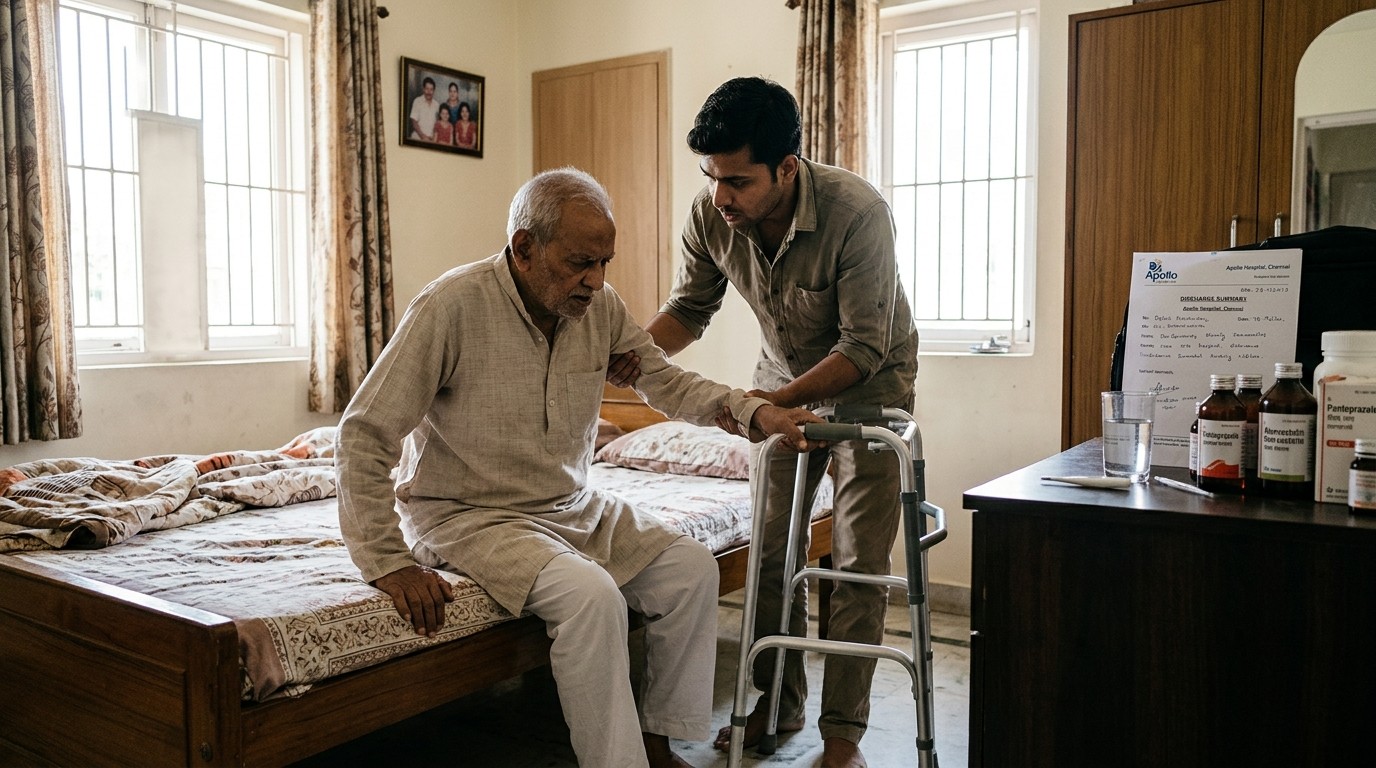
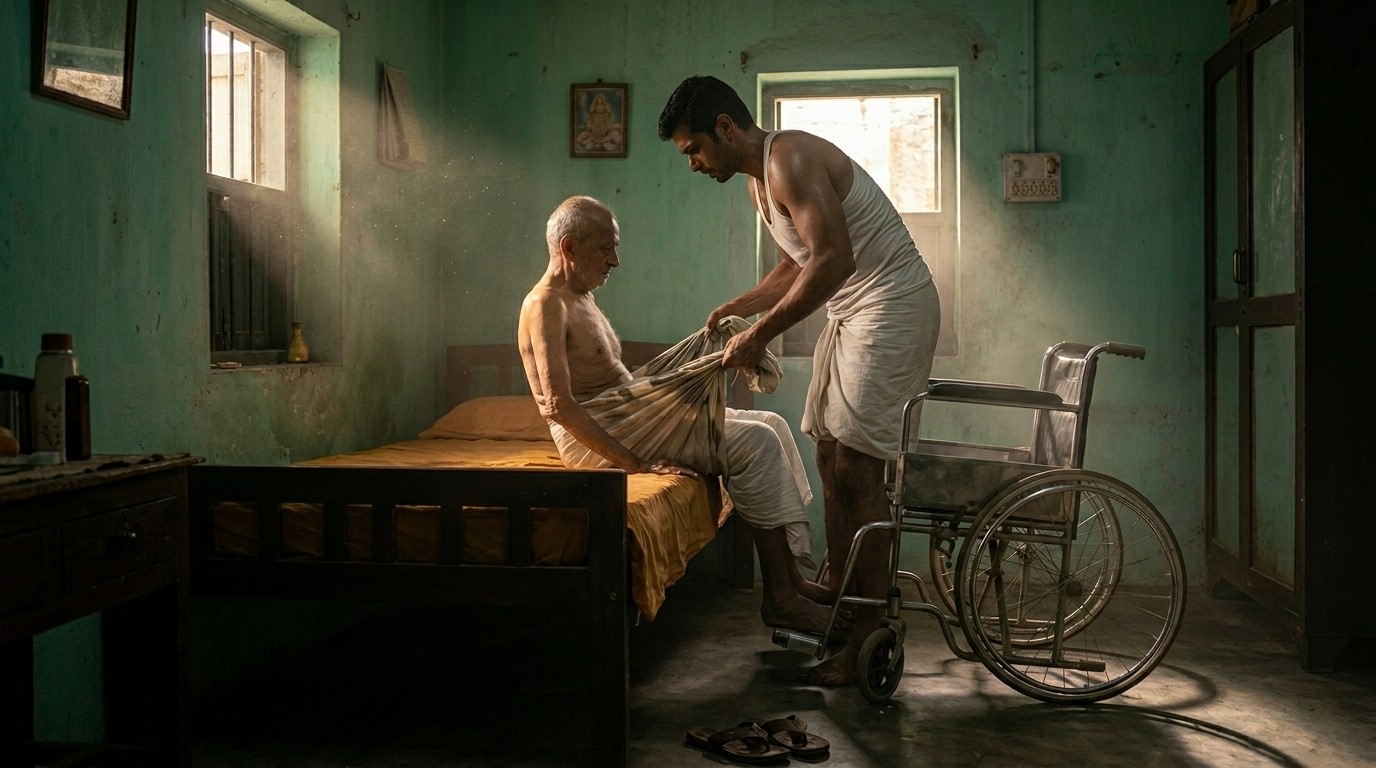
Transfer is the highest-risk moment in the caregiving day
Bed → wheelchair → toilet → chair. Multiple times daily. Improvised techniques can cause musculoskeletal injury in patient again.
Design implication
The problem isn’t mobility, it’s safe transfer. That reframes the product category.
02
Fear of unknown is as present as
physical effort
Fear of not knowing injury type. Fear of worsening a fracture or Fear of hurting another muscle. Anxiety shapes every lift before it even begins.
Design implication
Designing an aware & confidence-building system, not only a lifting aid.
03

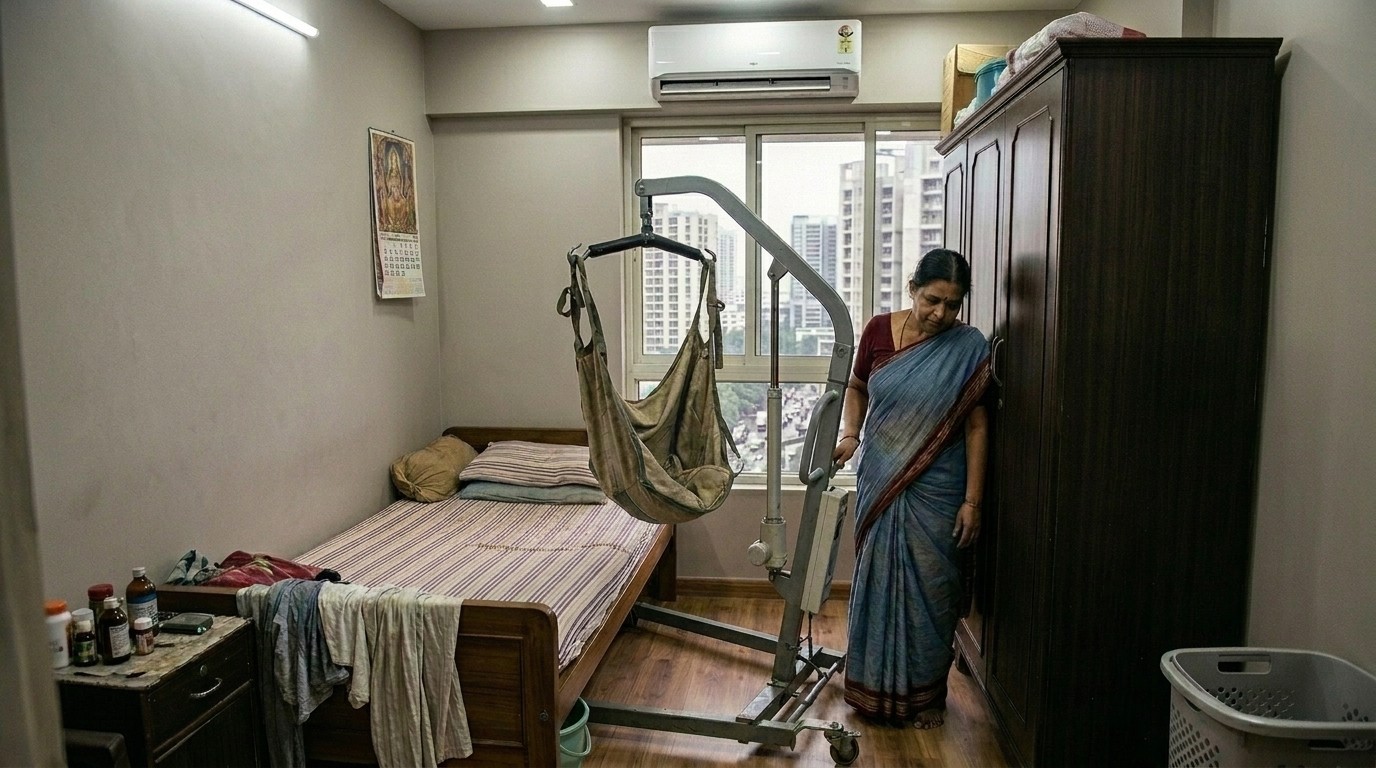
Indian homes reject institutional equipment
Narrow corridors and spaces. Clinical hoists and ceiling track systems were built for hospital wards, not these homes where improvised system works.
Design implication
Home-scale and spatially sympathetic. Work with home makeshift methods as well.
04
Existing Solutions

Transfer Boards
↑ Inexpensive, Portable
↓ Needs upper body strength of the patient
↓ Unsuitable for many injuries
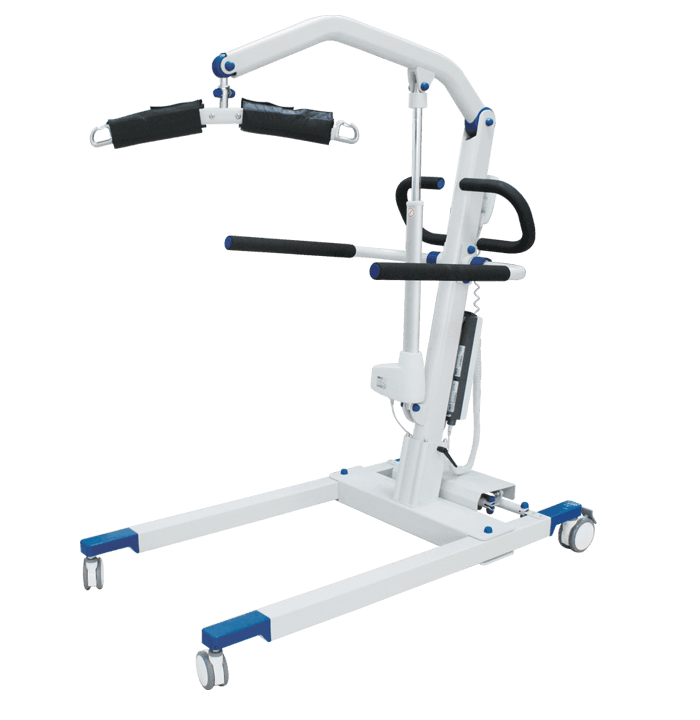
Patient Hoist
↑ Safer Load Distribution
↓ High cost, Clinical Assumption
↓ Too bulky for Indian homes

Sit to Stand System
↑ Rehab Friendly Motion
↓ Assumes clinical Environment
↓ Not injury Specific
RESEARCH STATEMENT
Rehabilitation moves from hospital to home. Untrained family members become the caregivers. The most demanding task, patient transfer, has no good solution at home scale. This is the opportunity for an injury-aware transfer system that serves patient and caregiver equally.
02 ~ The Question
What actually goes wrong when a person is moved?
The design brief was not about the device. It was about a broken moment, the transfer and two people caught inside it: the patient, managing pain and dignity; and the caregiver, managing fear of causing harm.
Existing aids address the physical mechanics. None address the relational anxiety of that moment: the hesitation, the miscommunication, the absence of feedback.
Before
Preparation
Caregiver assesses surface, injury, available equipment. Often no protocol.
During
The Transfer
Point of maximum vulnerability, for both bodies involved.
← Design opportunity
After
Recovery
Pain assessment, Repositioning, Patient & Caregiver fatigue.
Physical
Transferring Between the Surfaces
Bed to wheelchair, Wheelchair to stretcher and then to X-ray bed or hospital bed. No existing aid supports the limb across all transitions.
Physical
One-Size
Fails All
Muscle injuries need softness. Bone injuries need rigidity. No single device addresses both.
Systemic
Awareness Gap
Healthcare providers and family caregivers lack training on appropriate transfer aids.
Systemic
No Choice of Selection
The patient’s voice is absent from decisions about how they are moved.
Rajesh, 62
Post-femur fracture · Jaipur · Cared for at home
Recovering after an accident at home, Fell From terrace. Transfers happen 4–6 times daily ~ Bed to stretcher, Stretcher to wheelchair, Stretcher to X-ray or hospital bed.
His son manages all transfers alone. No nursing training. The fear of causing pain means he hesitates at the critical moment.
← Primary user: the informal family caregiver
Lokesh, 27
Family caregiver · Son · No medical training
Manages his father’s transfers between work shifts. His main concern is not dropping him. The current solution: folded bedsheets and improvisation.
← Secondary user: the patient
03 ~ The Thesis
“Support is not static . Injury type, body weight, and a transfer context, all demand a surface that can be reconfigured, not replaced."
A monolithic transfer aid imposes a single solution onto a variable problem. Stride Assist begins from the opposite premise: that the surface beneath the limb should be as specific as the injury above it.
Three research threads that shaped the form
I
Existing Landscape
Transfer belts, slide boards, and hoist systems address movement, not surface contact. They assume a trained handler and a hospital context. Neither condition holds in most Indian homes.
Shared failure: they treat the body as cargo, not as a person with a specific injury.
II
The Informal Care Economy
In India, an estimated 80% of disability care is delivered by untrained family members. The design question is not just what supports the limb, but what a non-specialist can configure without instruction.
Jugaad as a philosophy: modular, field-assemblable, legible without a manual.
III
Biomimicry Logic
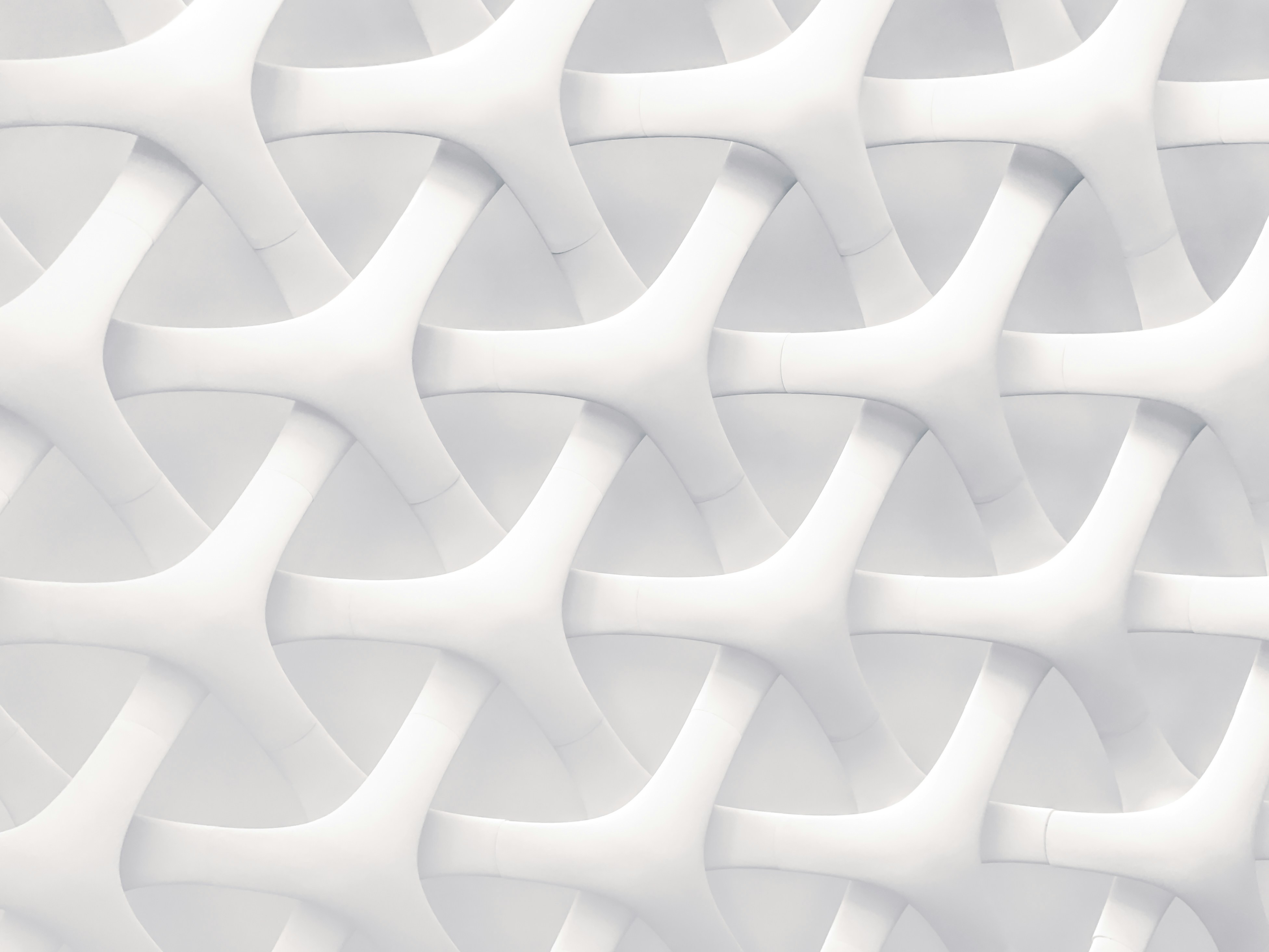
Geological formations and molecular structures reveal a consistent principle: hexagonal geometry distributes compressive forces more evenly than any other regular polygon.
Basalt Columns → Honeycomb → Shell Form





04 ~ The System
Two components.
One adaptive surface.
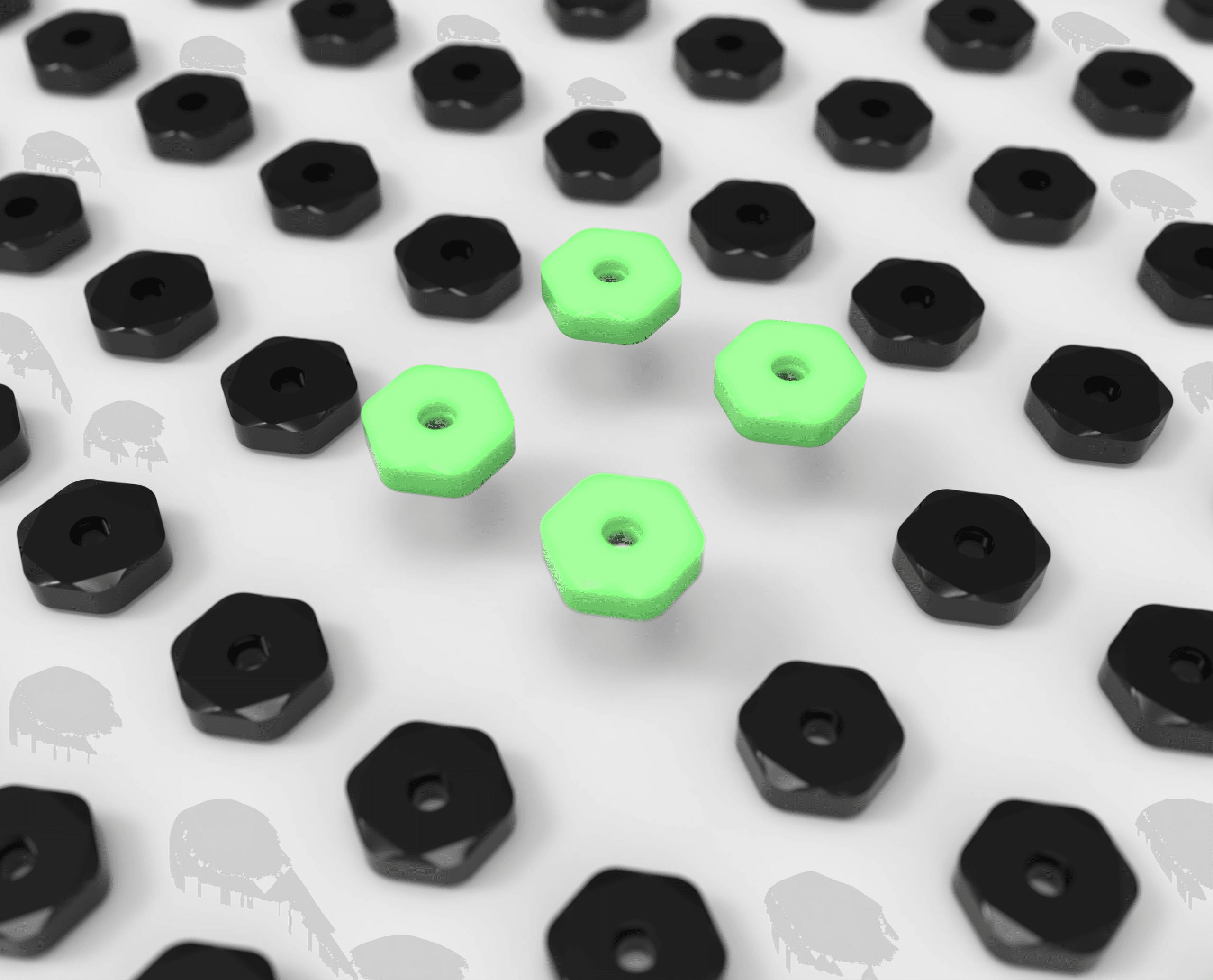
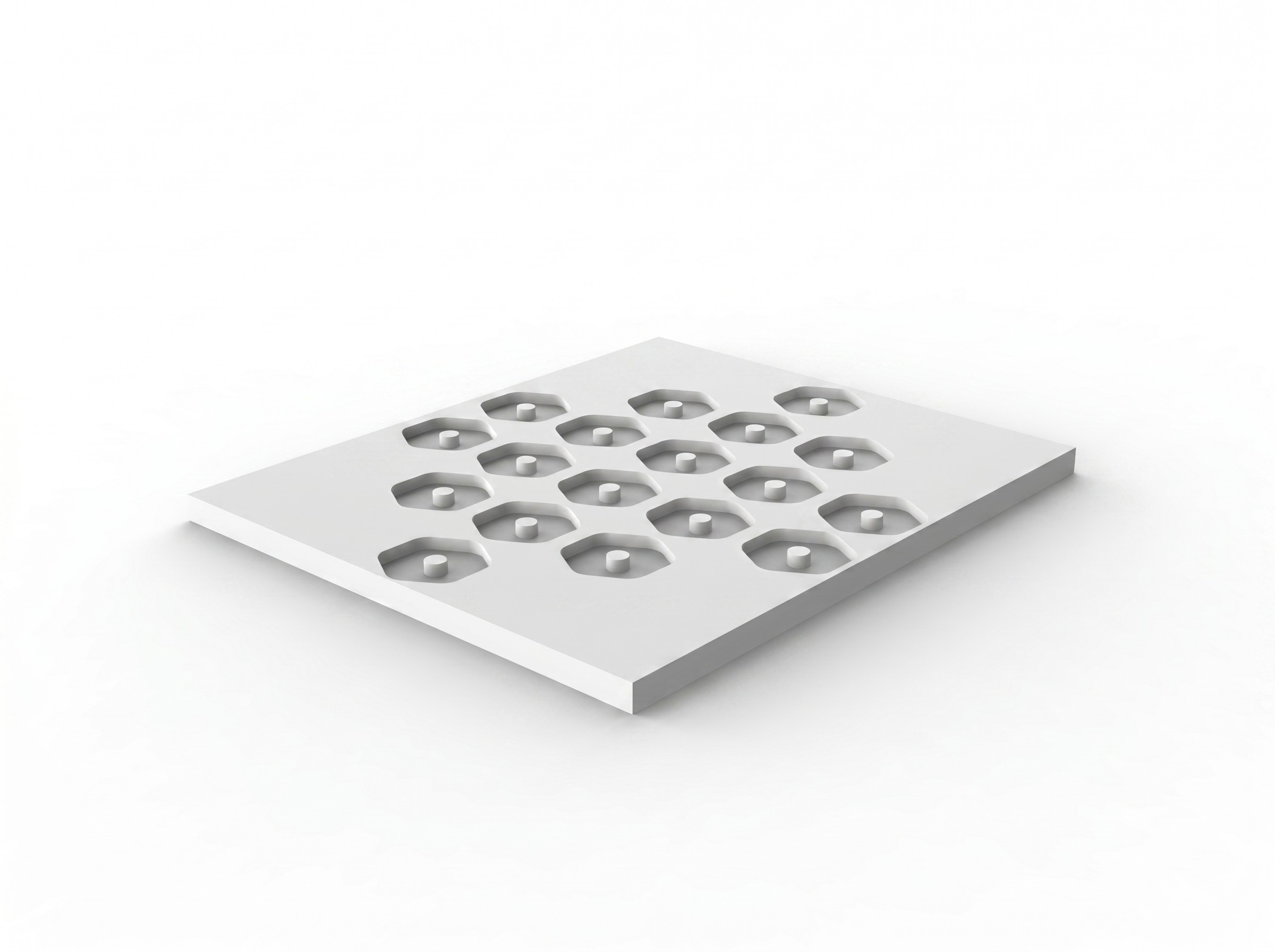
The system separates support into two independent layers, hexagonal hard shells for structural rigidity, and a TPE flexible tray for softness and friction. Together they create a configurable support surface. Independently, each addresses a different category of injury.
Crucially: a non-specialist caregiver can reconfigure the surface in under a minute, without tools or many instructions.


Hexagonal Shells
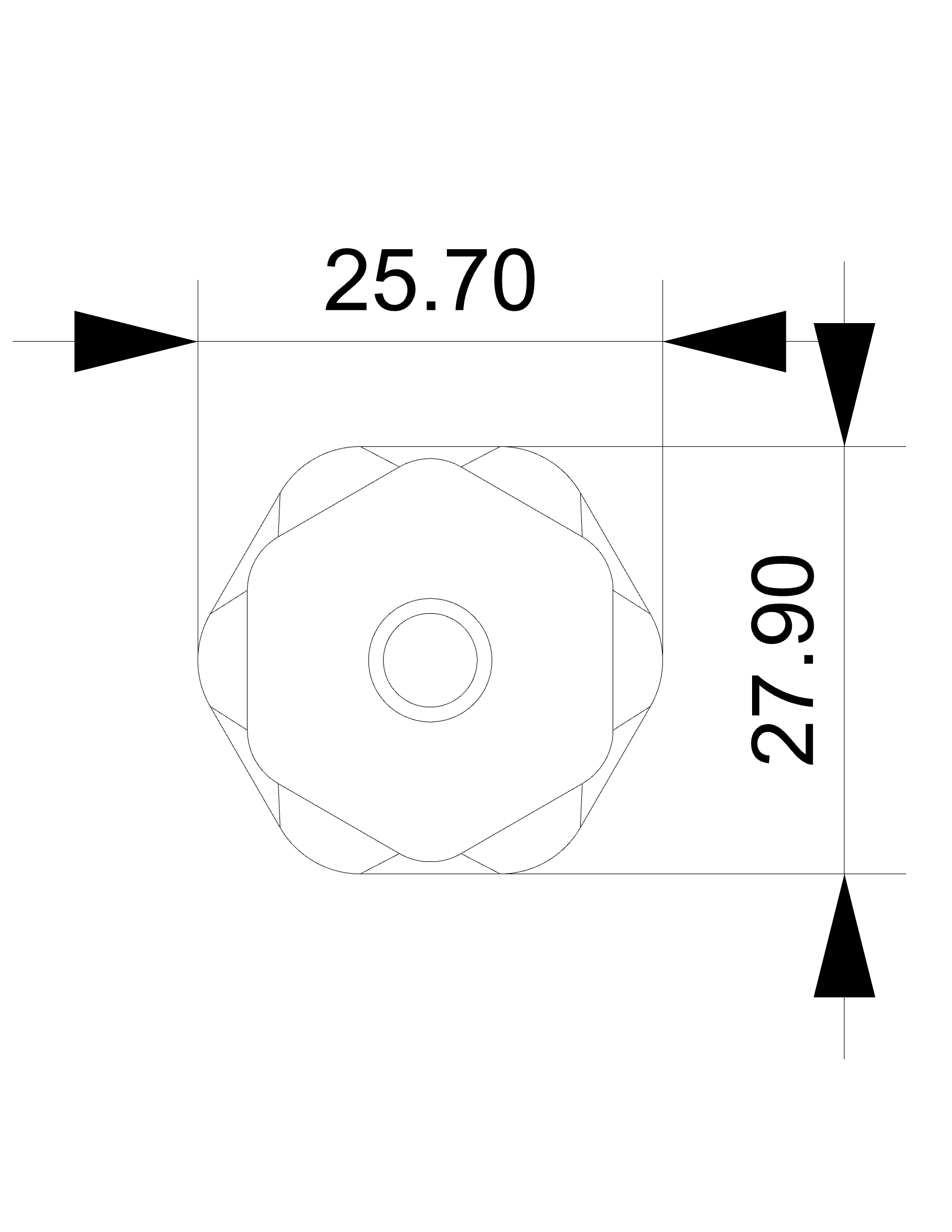
Made from PLA. The hexagonal form distributes compressive load evenly across six facets, eliminating pressure hotspots at the injury site. Shells can be added, removed, or repositioned on the tray for bone injuries requiring hard support during transfer.
HARD/RIGID SUPPORT


TPE Flexible Tray
Soft enough to conform to limb contour, yet structured enough to maintain its form under load. The tray’s soft cylinders provide cushioning support. Used alone, it becomes a gentle cradle. Used with shells, a hybrid support platform.
SOFT/HYBRID SUPPORT
Three configurations for three injury types
The surface adapts to the injury, not the other way around.
Soft Configuration
Tray alone, no shells. For muscle tears, sprains, and soft tissue injuries where pressure must be distributed and minimised.

Rigid Configuration
Full shell coverage. For fractures and post-operative bone injuries requiring structural support and elevation.

Hybrid Configuration
Shells on the fracture zone, bare tray elsewhere. For compound injuries with both hard and soft tissue involvement.
05 ~ The Prototype
Bio-responsible prototypes.
Testing & feedback.

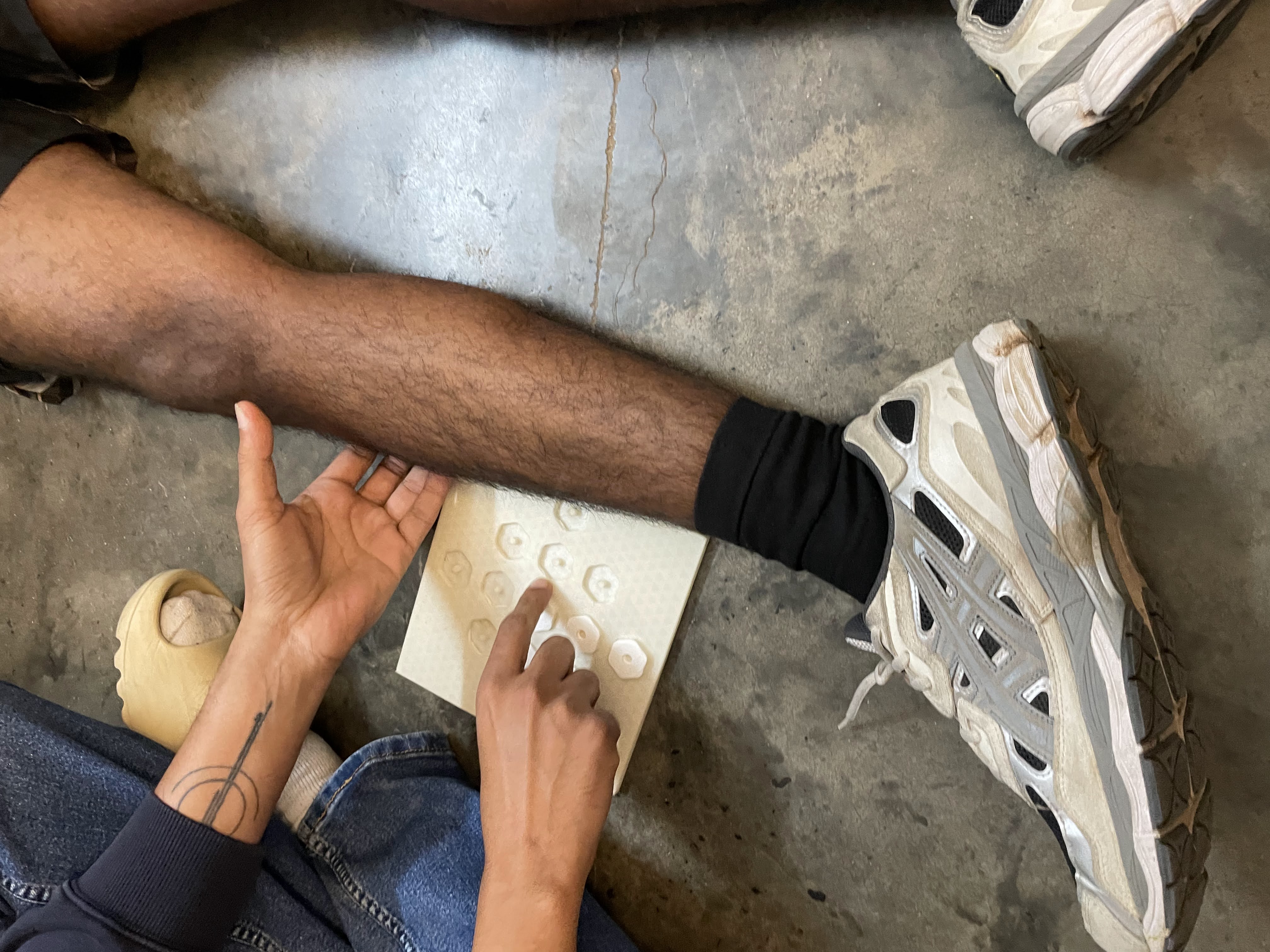

What worked: Shell removal was intuitive without instruction , caregivers reconfigured correctly on first attempt.
What didn’t: At 195mm, the tray was undersized for larger body frames. A larger variant is needed.
Unexpected: Patients reported the soft tray configuration felt more dignified than existing aids, less clinical, more considered.
Next test: Structured sessions with physiotherapists to validate shell geometry against clinical pressure standards.
“It’s the first time I’ve tried something, where I was able to Cooperate with injured player to support his sprain.”
06 ~ The Wider Frame
Where this project keeps going
Pressure sensing shells
A next-generation shell with embedded pressure sensors could provide haptic feedback to the caregiver, a gentle vibration indicating uneven load distribution before injury occurs.
Community health worker kit
A flat-pack version of the tray, manufacturable locally in Tier 2 and Tier 3 cities. Placing configuration decisions in the hands of frontline health workers, not supply chains.
Color-coded configuration system
A visual language ~ Color, not text that tells an untrained caregiver which shell arrangement corresponds to which injury type. Designed for literacy-independent use.
The dignity question
What would a version of this device look like that was designed from the patient’s agency, not the caregiver’s task? That question remains open. It may be a different project entirely.
Stride Assist was designed for a specific context ~ The Indian informal care economy, where more than 80% of disability care is delivered by untrained family members with improvised tools. That constraint is not a limitation. A product designed for resource constrained, non-specialist caregivers is a product designed for the world’s most common care situation. The stress test pushed it into the universal design.
The Open Question
The hardest part was asking: whose expertise matters most when a person is being moved and whose voice is missing from how these objects get designed? Stride Assist is a proposal, not an answer. The next step is putting it in the hands of physiotherapists, caregivers, and patients who weren’t part of its origin story.
Email :
Lakshitkumar007@gmail.com
© Copyright 2026. All Rights Reserved by Lakshit Kumar