Role
UX Design - Interaction Design - Research - Prototyping
Focus
Embodied Interaction - Healthcare UX - Behavioral Design
Duration
6 Week
Academic Project
“After immobility, movement becomes conscious.”
“Relearning movement feels unnatural.”
“Recovery is not only physical.”
Observation Beyond Treatment
Across hospitals, homecare environments, and physiotherapy sessions.
Recovery was studied through activities, environments, interactions, objects, and user behaviors.
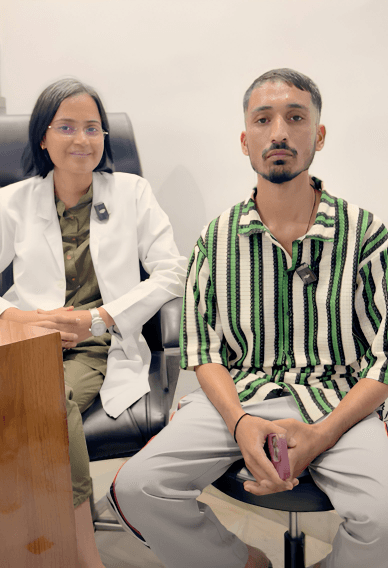
DR. Prableen Kaur and Shahrukh, JIPSI.
Adaptive Treatment methods that can be used for patients, professionals and kids ?
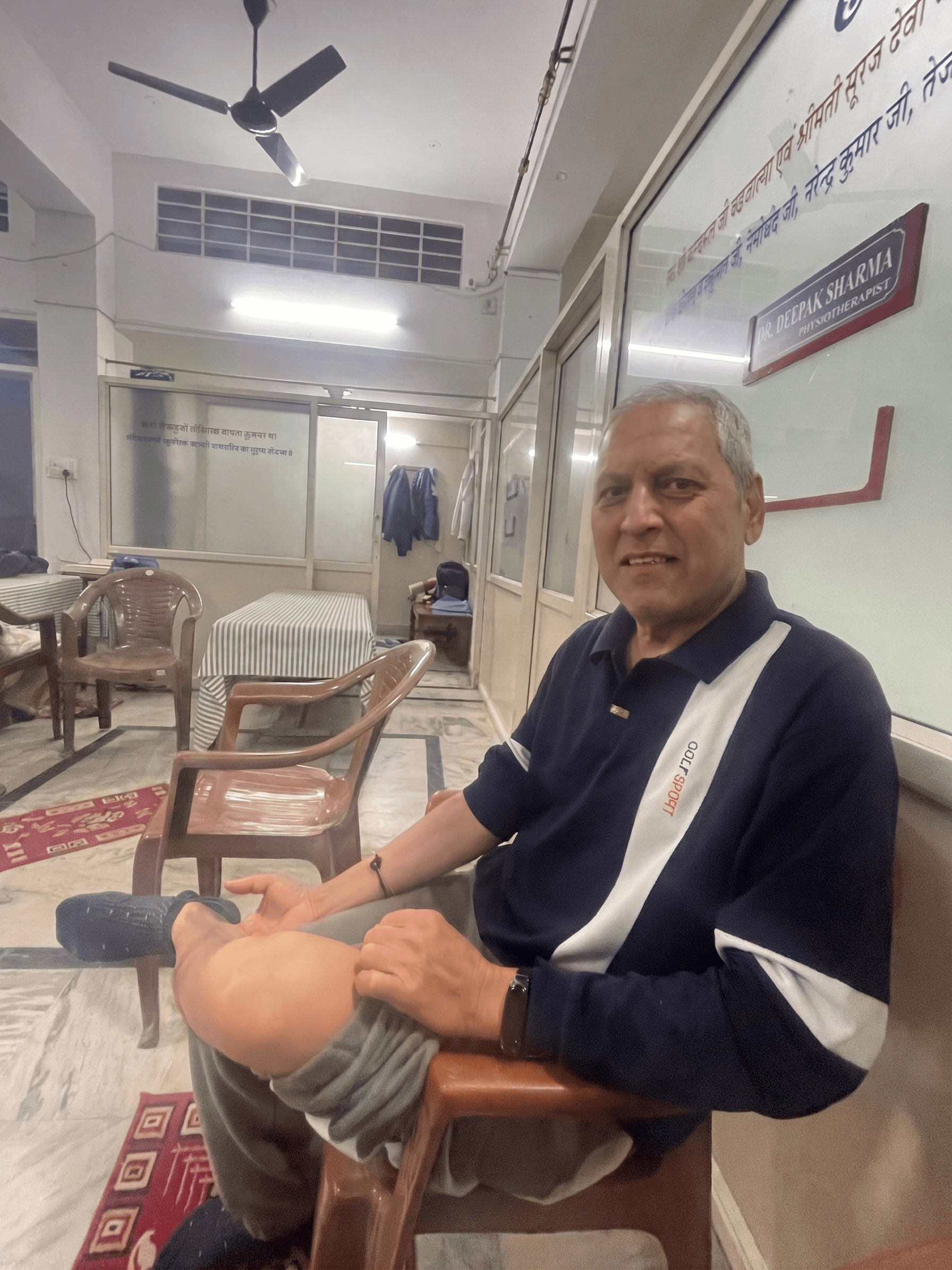
Sokhan Lal, BMC- Jain Temple
Is session intensity really that bad or people look for their comfort ?
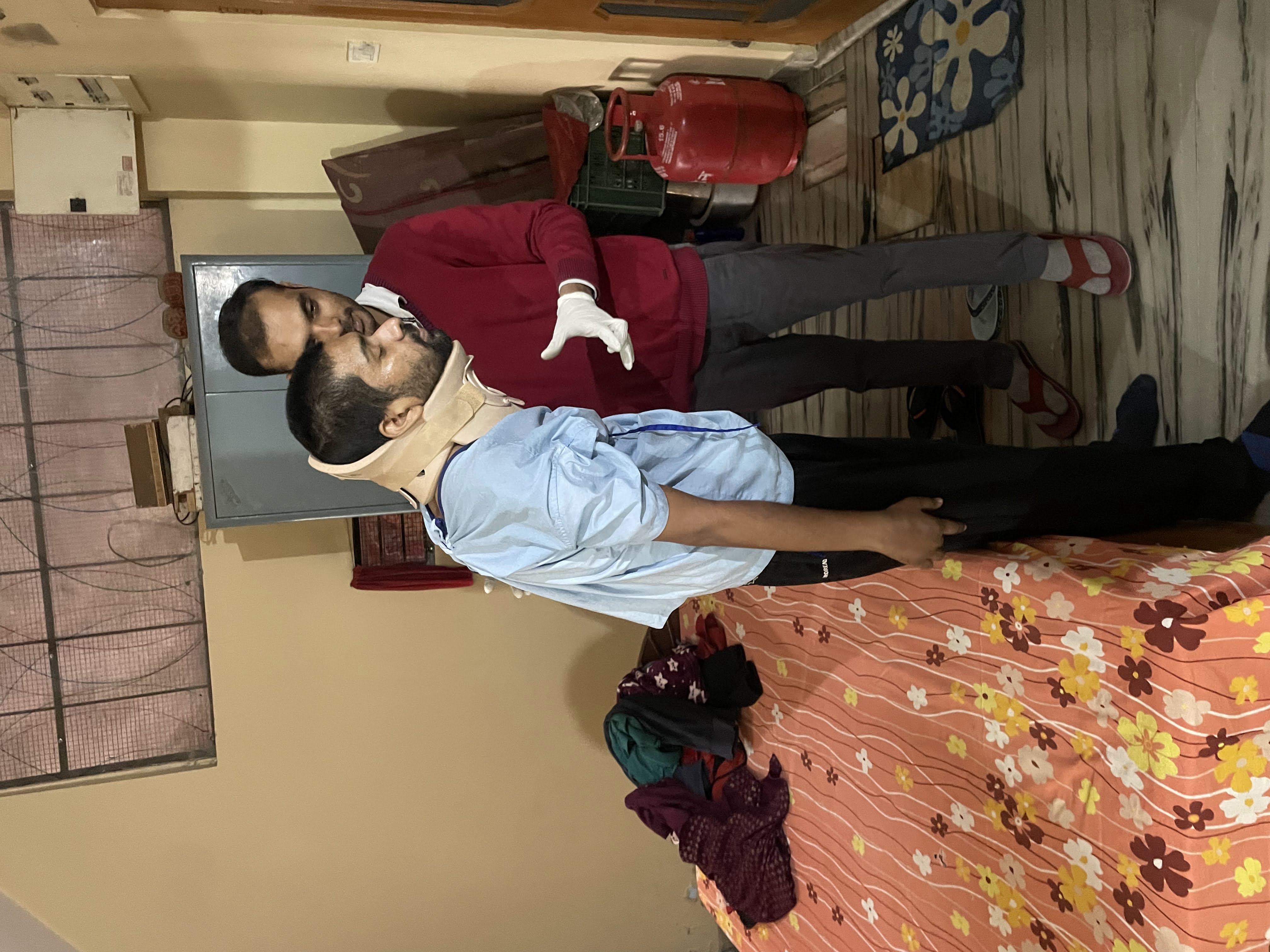
Abhishek, Homecare
What allows patients to exercise with minimal assistance ? Small progress milestone ?
Encouraging muscle use.
Insights from underneath the AEIOU Observation
Speech
"Feels weird to think about using my leg.”
"That physio session was great.”
“One step forward, two steps back.”
Behavior
Delayed movement initiation after instruction.
Struggled to maintain exercise routines independently.
Progress was frequently interrupted by inconsistency and fatigue.
Emerging Pattern
Recovery is often treated as a physical challenge.
Observations suggested it was equally a challenge of reconnecting with movement.
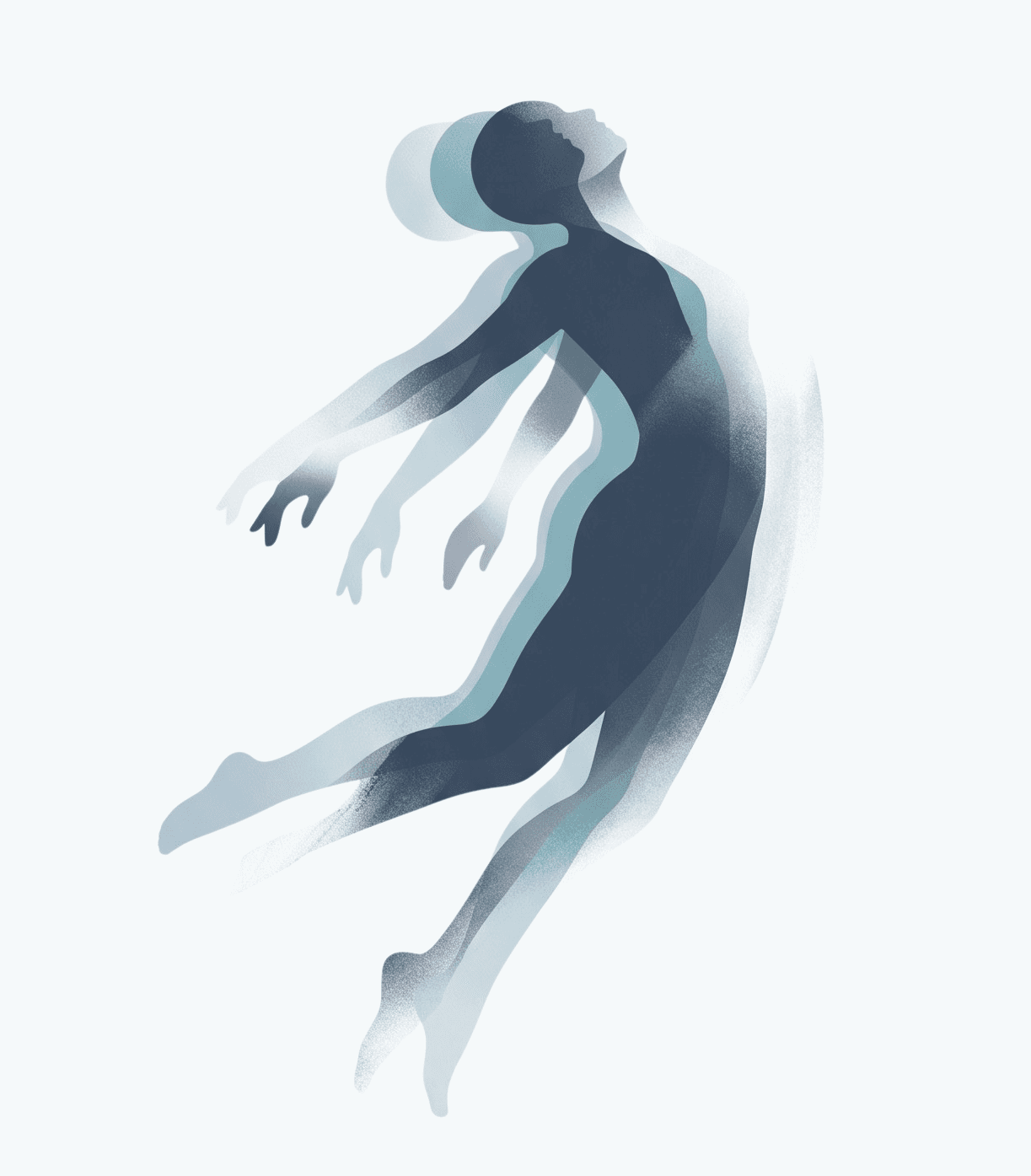
Resistance toward movement is often emotional/psychological before physical. People were not avoiding exercise, They were avoiding discomfort, uncertainty, and fear. This becomes a hinderance in checking small progress milestone.
One week of Inactivity, Months of Recovery
Even short periods of inactivity can trigger muscle loss, making recovery a gradual process of rebuilding strength and function. What is lost in days can take months to regain.
Muscle atrophy can begin in as little as seven days, creating a recovery journey that often extends far beyond the period of immobility.
Where could design Intervene ?
Recovery programs focus on rebuilding strength. My observations suggested another challenge: People often struggle to consistently re-engage with movement after periods of immobility. As inactivity persists, muscle loss accelerates while motivation, confidence, and bodily awareness decline.
How might we encourage individuals recovering from lower-limb immobility to reconnect with movement through engaging feedback?
Design Principles
Encourage bodily awareness
Reward consistency
Make progress milestone visible
Reduce resistance toward movement
Introducing 6T- Making Progress Perceptible.
A movement companion designed to make recovery more perceptible, encouraging individuals to reconnect with movement through feedback, awareness, and small moments of progress.
*Product as Proof of concept - Components mentioned Below
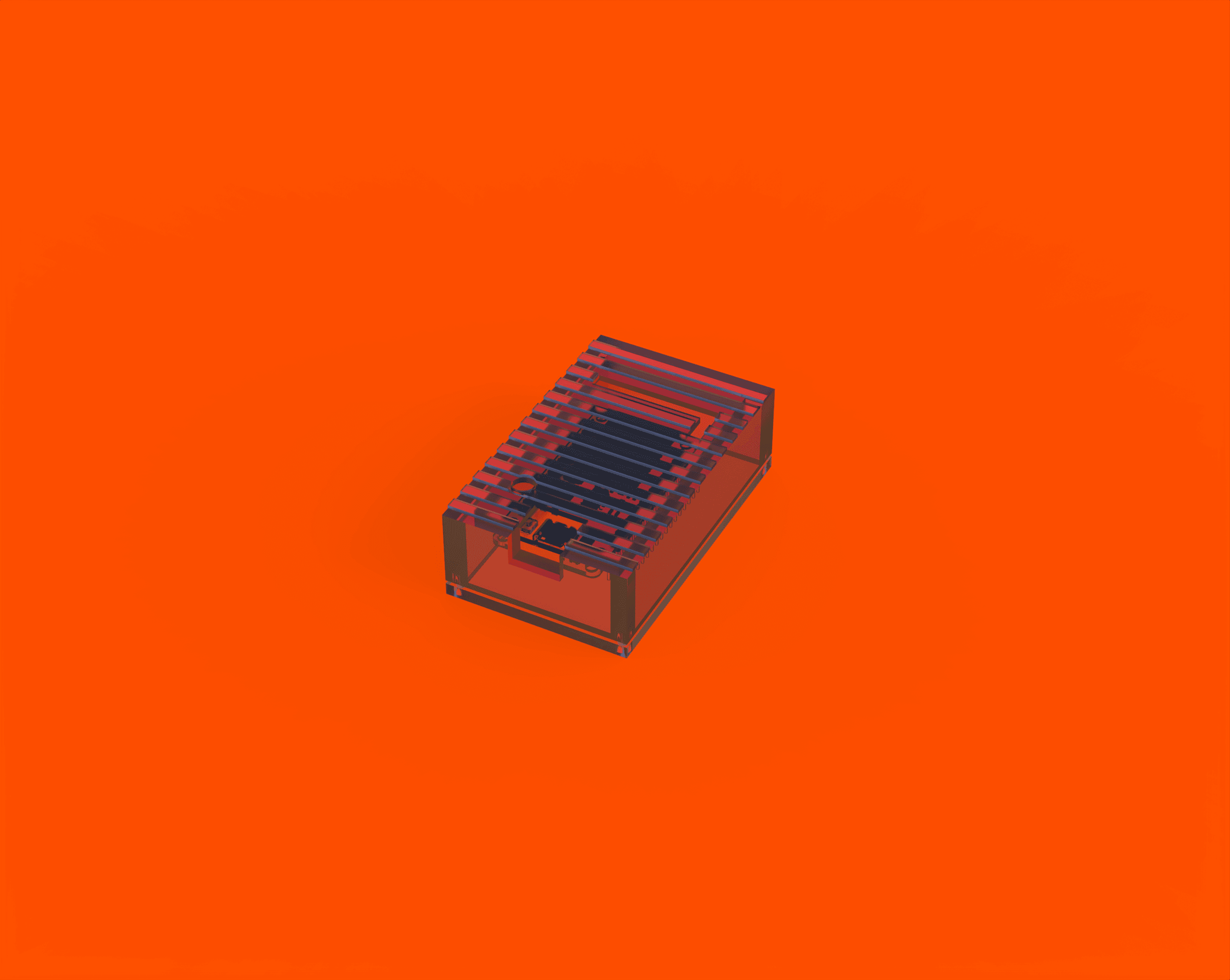
ESP32 & MPU 6050 Unit
MPU 6050 Unit to measure Knee Range of motion and ESP32 to control & convert the data to send it to play basic game as a design.
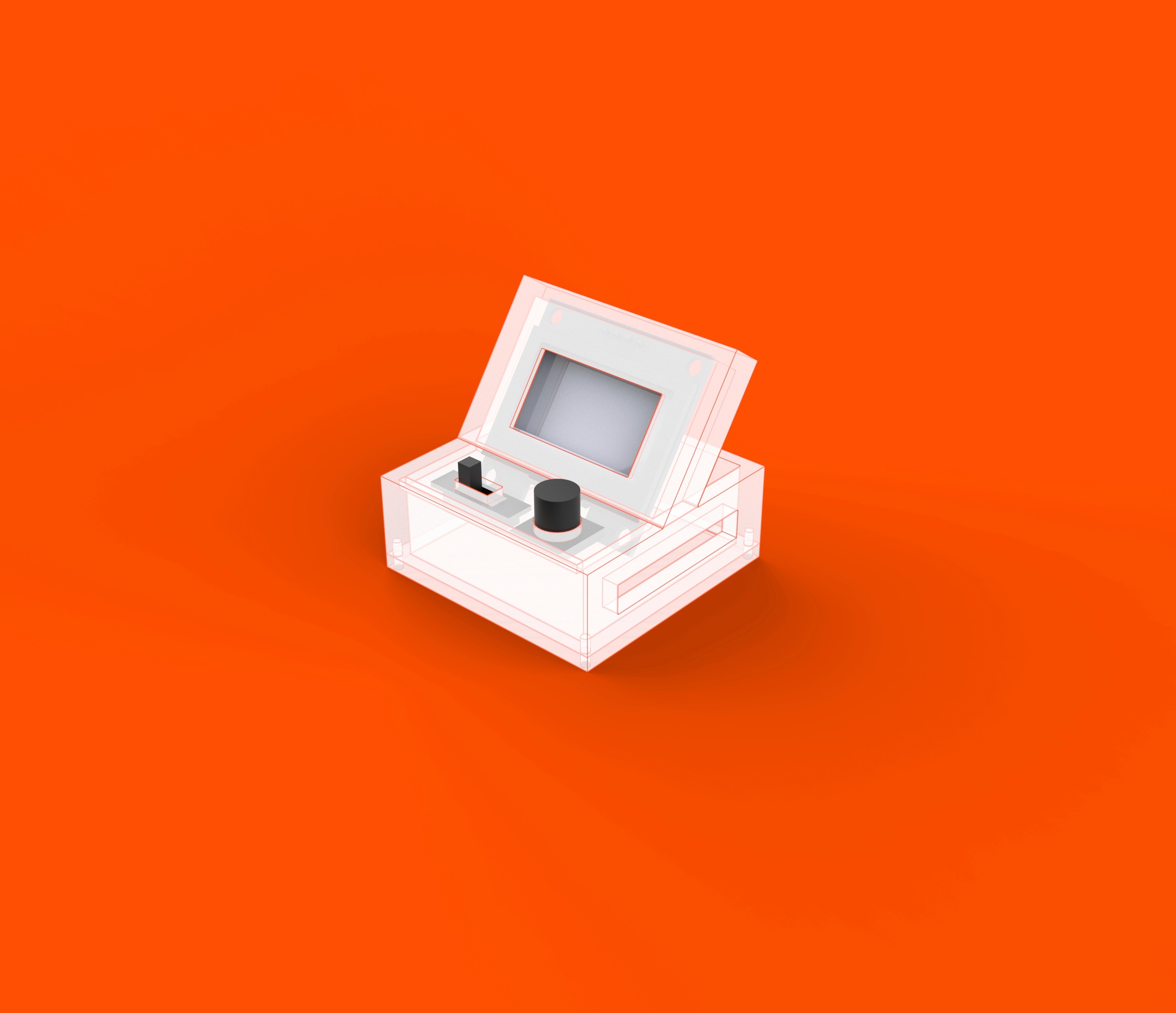
OLED Display Case
Another MPU 6050 unit along side the Display that shows your range of motion based on your excercise
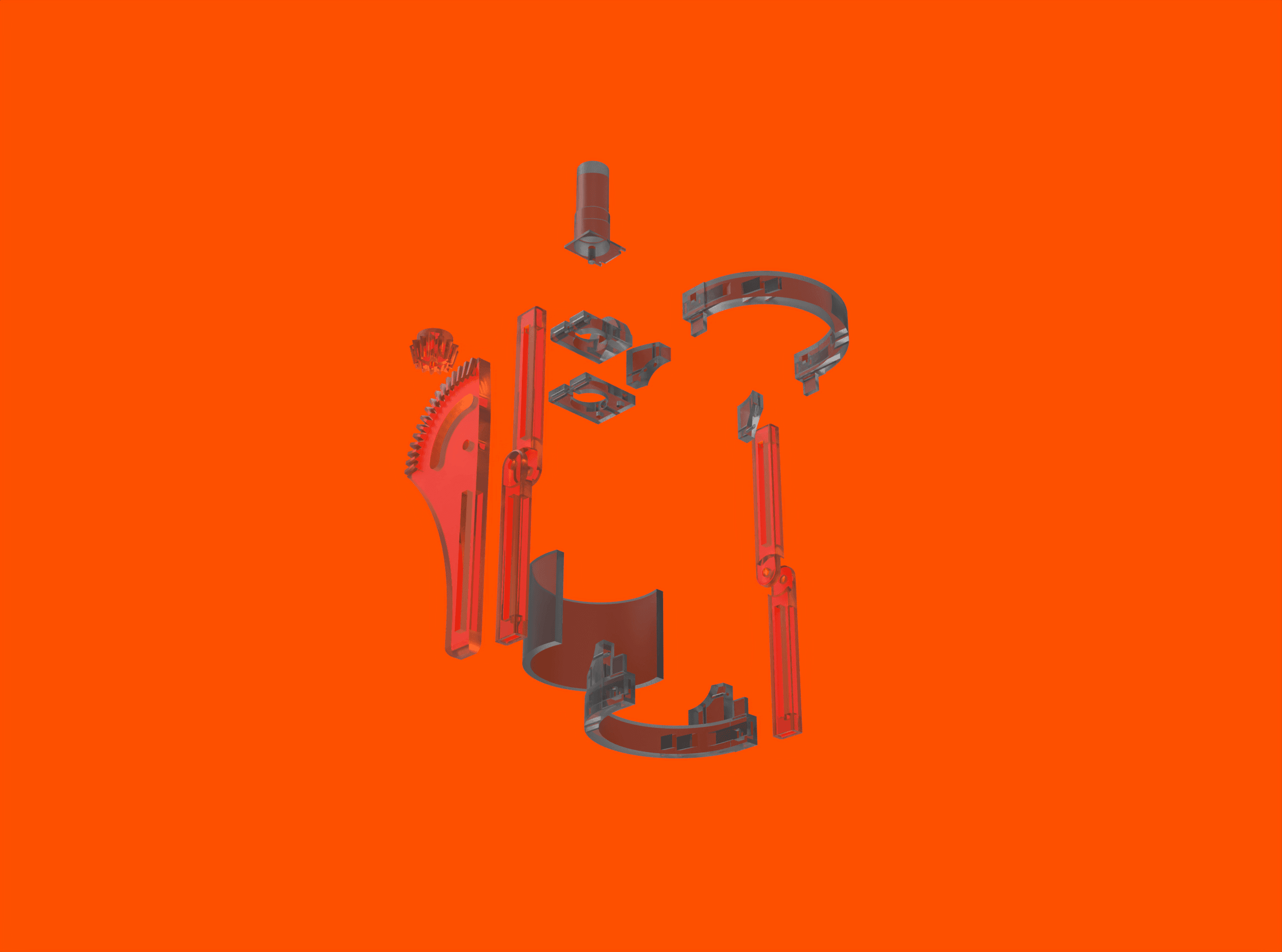
Future Scope
Current unit uses physical weight, that brings it's own set of limitations. Future scope here talks about the potential that can be worked on.
Wearing and Using of the Prototype
This system utilizes:
Two MPU6050 sensors to measure the relative angle between the thigh and shin, capturing knee flexion and extension. A 0.96” OLED display to show live angle feedback and an ESP32-based web interface using WebSocket to visualize and gamify ROM data.

Weighted Calf Strip belts, Goes from 0.7kg to 1.8Kg

Putting on the weight belts, neutral position of the leg.

Thigh support to hold the electronic unit.

Taking Velcro strip off to mount the electronic unit.

Mounting both the unit and sensor to the Calf unit.

Turning on the unit to begin exercise, Ideally on the resting leg.

Post Calibration of both the sensors, it shows the range of motion.

As you begin your workout, You can see your progress, ROM and more.
Recovery Through Play.
Small Wins, Repeated Daily
A series of movement-based experiences that make effort visible, progress perceptible, and recovery more engaging.
Play with UI here mimicking the physical effort to hold and move the knee at a specific angle.
Dart Throw for Precision & Control : Holding a target range steadily rewards consistency and controlled movement.
Unlock the Safe for Progressive Range Building : Patients gradually work through increasing ROM targets, mirroring a structured rehabilitation session.
Rather than treating rehabilitation as a series of repetitive exercises, 6T reframes recovery as a collection of interactive experiences. Each activity is designed around a therapeutic movement goal while providing immediate feedback, clear milestones, and moments of achievement that encourage users to return and continue progressing.
Kick the Skittles for Confidence Through Motion : Encourages users to explore a wider range of movement while rewarding effort beyond their comfort zone.
Future Scope for Project 6T and New System

Replacing Weights
Instead of physical weights, 6TB will aim to preload weights through Pinion gear to gently immobilize.

Recovery Type
Unlike 6T , This would be an independent unit. and more centered to active recovery.

Electronics and Interface
Integrating electronics, All wireless. Data visible digitally.
People do not simply lose mobility during recovery. They often lose their relationship with movement. This project explored how diverse aspect of design might help rebuild that relationship.
Email :
Lakshitkumar007@gmail.com
© Copyright 2026. All Rights Reserved by Lakshit Kumar